


What Is a CVSA Test and How Can It Help Clear Your Name in Chico? We Use the Same Tools Law Enforcement Uses. And We Use Them For You. Rooney
In Chico and throughout the state of California, one spouse cannot legally stop a divorce simply by refusing to participate. Because California is a “no-fault” divorce state, the court does not require both parties to agree that the marriage should end. If one person decides the marriage is over, the legal process will move forward, regardless of whether the other spouse signs the papers or even acknowledges the filing.
The short answer is no. While an uncooperative spouse can create administrative hurdles and cause significant delays, they do not hold a “veto power” over your legal status. Your spouse’s signature is not a permission slip; it is simply a way to streamline the process.
In the eyes of the Butte County Superior Court, if you meet the residency requirements and follow the correct filing procedures, the court will eventually grant the dissolution of your marriage.
California Family Code §2310 established the standard for no-fault divorce. You do not need to prove adultery, abandonment, or cruelty to get divorced in Chico. You only need to state that there are irreconcilable differences, essentially, that the marriage has broken down past the point of repair and there is no reasonable possibility of reconciliation. California Family Code §2310 established the standard for no-fault divorce.
It is important to understand that while they cannot stop the divorce, an uncooperative spouse can turn a simple process into a contested divorce.
Refusing to sign doesn’t end the case; it simply shifts it into the default process, which allows the petitioner to move forward alone, often with the court granting exactly what was requested in the initial petition.
Is your spouse refusing to engage?
Silence or avoidance can feel like a dead end, but in the California legal system, it is actually a trigger for a different set of rules. You have the right to move forward with your life, and we have the tools to ensure your case stays on track.
[Schedule a Consultation to Discuss Your Uncooperative Spouse Strategy] You have the right to move forward with your life, and we have the tools to ensure your case stays on track.
Past results do not guarantee future outcomes. Your legal path depends on the specific facts of your case and the response (or lack thereof) from your spouse.
If your spouse refuses to sign papers or simply ignores the legal summons, the California legal system provides a specific path called a True Default. This process ensures that your life isn’t held hostage by a spouse’s lack of cooperation.
In a True Default, the court essentially proceeds as if the other spouse has forfeited their right to have a say in the matter, allowing you to finish your divorce alone.
The clock starts the moment your spouse is legally served with the Summons and Petition.
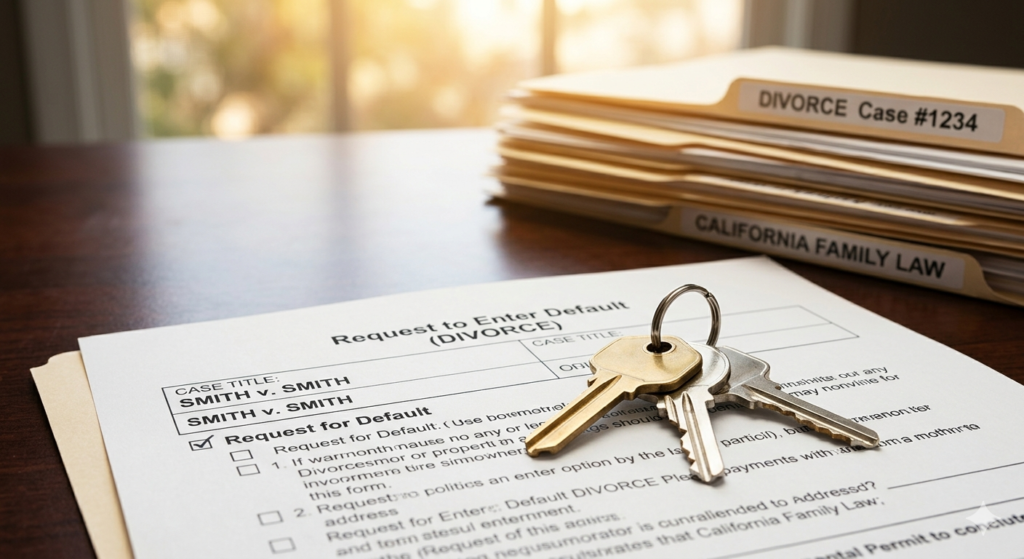
Filing Form FL-165 is the critical step that officially cuts an uncooperative spouse out of the process. Once the court clerk stamps this form:
To obtain a judgment without your spouse, you must prove to the Butte County Superior Court that you have followed every technical rule. The court will not sign a final judgment unless the following are on file:
In many simple default cases in Chico, a judge can sign your divorce decree by mail without you ever stepping foot in a courtroom. However, if your petition includes complex requests such as an unequal division of community property, restricted visitation for the other parent, or specific spousal support amounts, the judge may schedule a “Prove-Up” Hearing to ensure your requests are fair and consistent with California law.
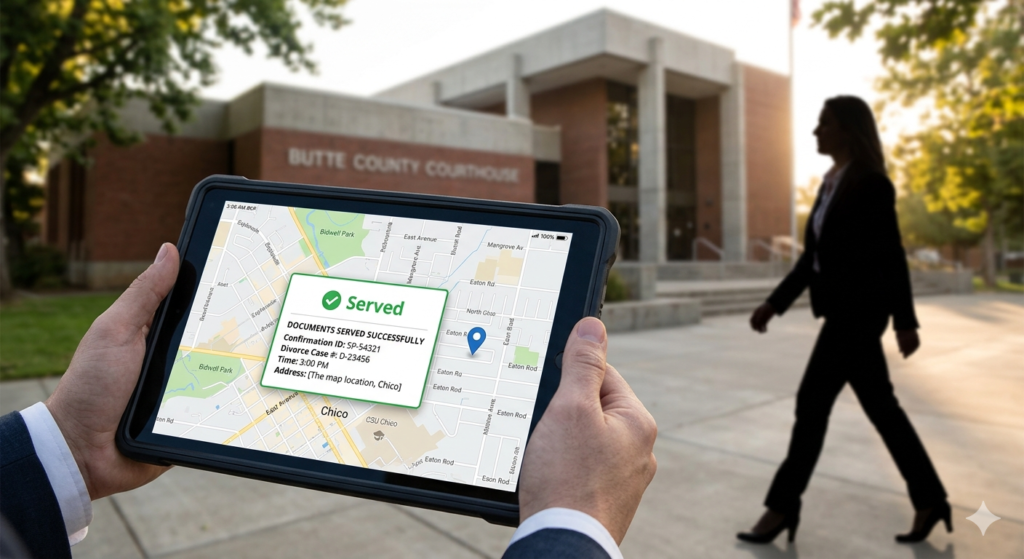
When a spouse refuses to open the door or hides their location, you can move from standard personal service to more tactical legal options:
|
Service Method |
When to Use It |
Legal Requirement |
|
Substituted Service |
When the spouse isn’t home but another adult is. |
Papers are left with a competent adult at the home/office, and a second copy is mailed. |
|
Service by Publication |
When you truly do not know where the spouse is. |
You must publish the summons in a local newspaper once a week for 4 consecutive weeks. |
|
Electronic Service |
When traditional methods are exhausted. |
Under SB 85, courts may authorize service via email or social media if you prove “due diligence” in trying to find them. |
|
Service by Acknowledgment |
When the spouse is cooperative but “busy.” |
You mail the papers, and they sign a form (FL-117) acknowledging they received them. |
Before a Butte County judge will grant permission for service by publication or electronic media, you must prove you made a diligent effort to find them. This “Due Diligence” typically includes:
If you are forced to use Service by Publication in a Chico newspaper, be prepared for an extended timeline. You must wait 28 days for the publication to complete, plus an additional 30 days for the spouse to respond. On the 59th day, you can finally file for a default judgment.
A common myth is that if a person refuses to touch the papers or drops them on the ground, they haven’t been “served.” This is incorrect. If a process server identifies the spouse and clearly states what the papers are, the server can leave the documents at their feet or on their car windshield, and the service is legally valid.
Is your divorce stalled because you can’t find your spouse?
Evasion is a temporary tactic, not a permanent shield. Our team uses private investigators and modern digital tracking to ensure that the court recognizes your “due diligence” and allows your case to proceed.
[Consult with our Chico Service Specialists to get your case moving again.]
Past results do not guarantee future outcomes. Alternative service requires specific court orders and strict adherence to the California Code of Civil Procedure.
While a spouse cannot legally stop the divorce, they can use specific legal issues, property, children, and support to create a “logjam” that delays your final judgment. In California, if a spouse refuses to settle, the case shifts from an uncontested path to a contested divorce, which significantly increases the timeline and financial toll. While a spouse cannot legally stop the divorce, they can use specific legal issues, property, custody, and child support issues to create a “logjam” that delays your final judgment.
A spouse who refuses to agree often forces the case toward a trial. The difference in cost and time is substantial:
|
Divorce Factor |
Uncontested (Agreed) |
Contested (Disputed) |
|
Typical Timeline |
6 to 12 months |
12 to 36+ months |
|
Typical Cost (Per Person) |
$435 to ~$5,500 |
$15,000 to $26,000+ |
|
Court Hearings |
None to 1 |
Multiple |
|
Resolution Method |
Settlement Agreement |
Judicial Trial |
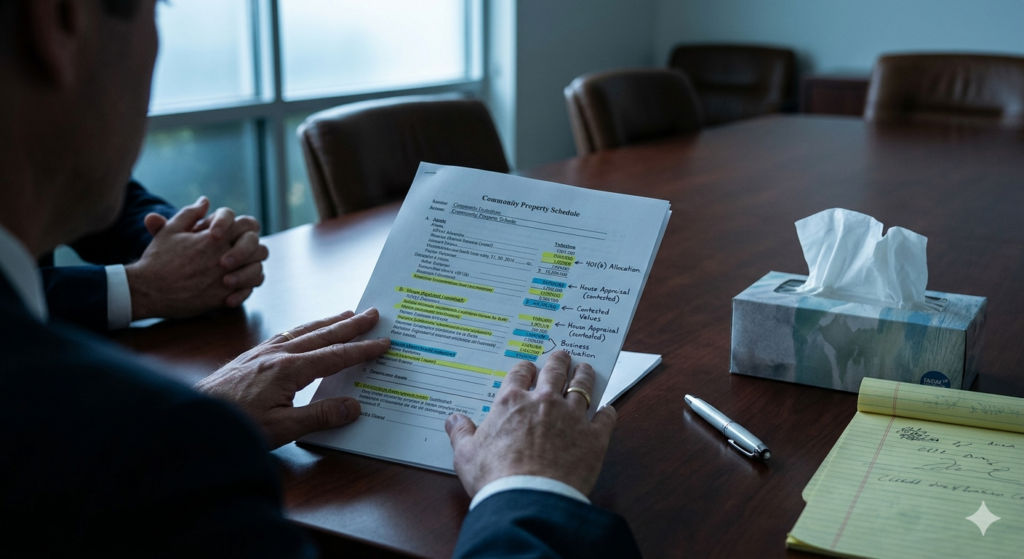
In California, community property must be divided equally. An uncooperative spouse may refuse to disclose bank accounts, retirement funds, or business assets.
One spouse may refuse to agree to a parenting plan as a way to “get back” at the other.
Refusing to sign papers does not stop support obligations.
The California Family Code (specifically Section 271) is designed to “reign in out-of-control litigants”. If your spouse is intentionally dragging their feet to drive up your costs, we can file a §271 Motion. If granted, the court can take money directly from their share of the community property to reimburse you for the extra legal fees they caused.
Past results do not guarantee future outcomes. Financial sanctions are at the discretion of the court and based on documented evidence of misconduct.
While California law provides the engine for your divorce, the Butte County Superior Court provides the local tracks you must follow. In Chico, navigating a case with an uncooperative spouse requires specific adherence to local rules that prioritize child welfare and procedural efficiency.
It is a common misconception that “no-fault” means “instant.” Under California Family Code § 2339, your marriage cannot be legally terminated until at least six months and one day have passed from the date the respondent was served.
If your case involves children and your spouse is contested or uncooperative, you are required to participate in mediation through Family Court Services (FCS) before a judge will make permanent custody orders.
|
Milestone |
Butte County Requirement |
Impact of Non-Cooperation |
|
Filing |
Petition (FL-100) filed at the Chico or Oroville clerk’s office. |
No impact; you can file unilaterally. |
|
Orientation |
Mandatory Online Mediation Orientation must be completed. |
If your spouse skips this, they may be barred from testifying on custody issues. |
|
Financials |
Preliminary Declarations of Disclosure must be served. |
You must still file yours even if they refuse to file theirs. |
|
Final Judgment |
Submitted to the Civil Division for a judge’s signature. |
Can be obtained via “True Default” if they never respond. |
No. Your spouse cannot “veto” the divorce. If they refuse to sign, you can proceed through a True Default, where the judge can grant the divorce without their participation.
No. California is a “no-fault” state, meaning only one person needs to state that the marriage has “irreconcilable differences”. The court’s jurisdiction begins the moment the other spouse is served.
If they don’t file a response within 30 days of being served, you can file a Request to Enter Default (FL-165). This effectively removes them from the decision-making process, and the judge will typically grant the orders you requested in your initial petition.
Yes. While they can’t stop the dissolution of the marriage, a spouse can delay the final judgment by contesting child custody or financial support. However, you can ask for Temporary Orders to ensure you have financial support and a set parenting schedule while the case is pending.
You should hire a lawyer as soon as you realize your spouse is going to be uncooperative. A lawyer is essential for handling service of process on an evasive spouse and ensuring your default judgment packet is legally bulletproof so the judge doesn’t reject it.
If you are facing a spouse who says “I’ll never sign those papers,” follow this roadmap:
A refusal to cooperate is a common tactic used to exert control, but the California Family Code is built to break that control. At the Rooney Law Firm, we specialize in moving “stalled” cases forward. Whether your spouse is hiding, evading service, or simply refusing to acknowledge the truth, we have the experience to finish your divorce with or without them.
(530) LAW-HELP (530-345-5678)
(800) TKO-4LAW (800-856-4529)
(530) 529-4357
Available in Chico, Redding, and Nevada City
One spouse cannot legally stop a divorce in California by refusing to cooperate. If your spouse will not sign, respond, or accept papers, you still have legal options to move the case forward. Early legal guidance can help you handle service, enter default when appropriate, protect your property and support rights, and keep your divorce on track in Chico and Butte County.
What Is a CVSA Test and How Can It Help Clear Your Name in Chico? We Use the Same Tools Law Enforcement Uses. And We Use Them For You. Rooney
Truck Accidents in Chico, California: What Victims Should Know Truck accidents in Chico can leave families dealing with serious injuries, lost income, and difficult questions about what to do next.

Top 5 Dangerous Intersections in Chico CA for Car Accidents Dangerous intersections in Chico CA can put drivers at serious risk because of traffic volume, turning conflicts, poor visibility, and