
CVSA vs Polygraph | Key Differences, Strengths and Limits
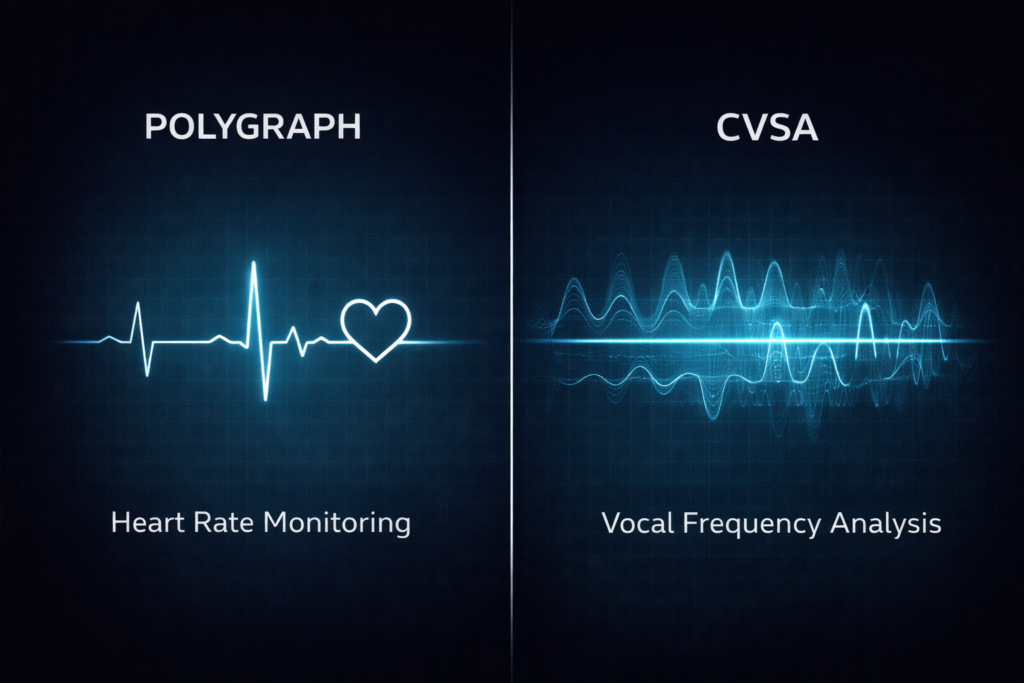
In the field of truth verification, the CVSA (Computer Voice Stress Analyzer) and the polygraph are the two primary tools used to detect deception, but they operate on fundamentally different scientific principles. While a polygraph measures multi-channel physiological responses including heart rate, blood pressure, and sweat gland activity the CVSA measures a single variable: vocal micro-tremors associated with psychological stress.
The choice between the two often depends on the specific legal goals, the environment of the test, and how the results will be utilized in negotiations or investigations. Neither is a “magic button” for courtroom success, but both serve as powerful decision-support tools for attorneys and private individuals.
The Paradigm Shift: From Sensors to Sound
The history of lie detection has evolved from the early 20th-century polygraph to modern digital voice stress analysis.
- The Polygraph Era (1920s – Present): For over a century, the polygraph has been the “gold standard” for federal law enforcement, including the FBI and CIA. It is based on the “fight or flight” response, assuming that the act of lying triggers uncontrollable biological changes.
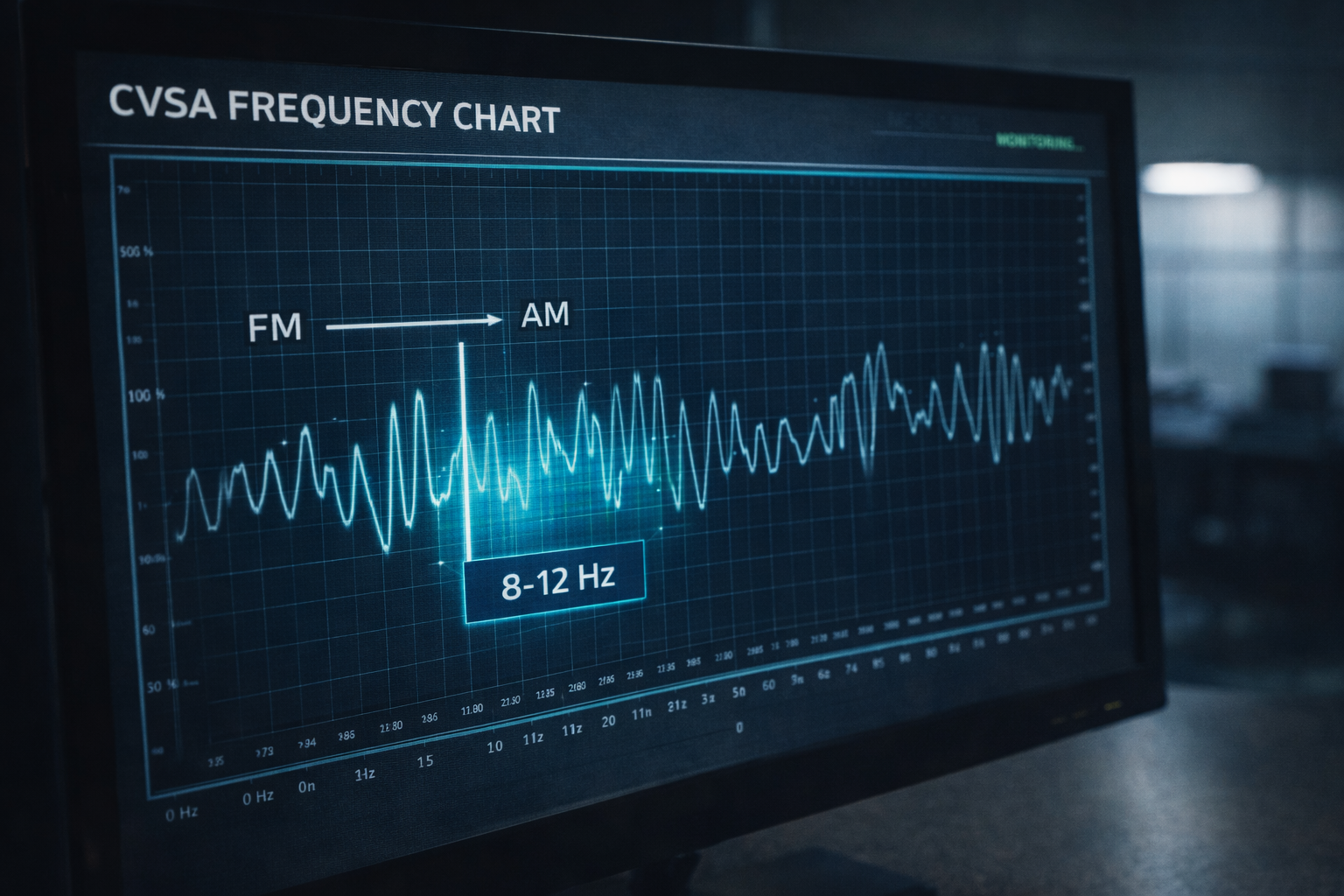
- The Digital Evolution (1970s – Present): CVSA technology emerged as a non-invasive alternative, gaining traction in local law enforcement and private sectors. By isolating the 8-12 Hz frequency range in the human voice, CVSA identifies tremors that are inaudible to the human ear but detectable by specialized algorithms.
The Chico Connection: Why an Attorney-Backed Comparison Matters
At the Rooney Law Firm, we recognize that our clients in Chico, Oroville, and the North State need more than just a test result; they need a legal strategy. Whether you are facing a criminal allegation in Butte County or a sensitive family dispute, the “best” test is the one that provides the most leverage without creating unnecessary legal risk.
In California, Evidence Code § 351.1 strictly limits the admissibility of polygraph results in criminal trials unless both the prosecution and defense stipulate to them. Because the legal landscape is so restrictive, we provide both CVSA and polygraph insights to help you decide which tool can best support a pre-filing intervention, a plea negotiation, or a private resolution.
Foundation Check: Key Technical Differences
Feature | Polygraph | CVSA |
Primary Variable | Multiple (Heart, Breath, Skin) | Single (Voice Tremors) |
Sensors | Physical (Cuffs, Tubes, Pads) | Non-Invasive (Microphone) |
Scientific Basis | Autonomic Nervous System | Vocal Micro-tremor Frequencies |
Best Used For | Federal & Post-Conviction | Investigative & Personal Clarity |
Do you need to decide which test fits your case?
Chico Phone:
(530) LAW-HELP (530-345-5678)
Toll Free:
(800) TKO-4LAW (800-856-4529)
24/7 Text Line:
(530) 529-4357
A strategy review can help determine if the physiological rigor of a polygraph or the non-invasive speed of a CVSA is the right choice for your current legal standing.
Results depend on the specific facts of your case. Past outcomes do not guarantee future results.
The Physics of CVSA: Decoding the Micro-Tremor
The Computer Voice Stress Analyzer (CVSA) California Lie Detector servicesoperates on the principle that the human voice is a window into the central nervous system. When an individual is under psychological stress—such as when they are attempting to deceive the body undergoes a “micro-reaction”.
- The 8-12 Hz Frequency: Every human voice contains a low-frequency pulse known as a vocal micro-tremor. These tremors occur in the 8-12 Hz range and are governed by the brain’s involuntary control.
- The FM to AM Shift: Under normal, non-stressed conditions, these tremors produce a “Frequency Modulated” (FM) signal. However, when the “fight or flight” response is triggered by a lie, the muscles in the vocal tract tighten, suppressing the FM signal and turning it into an “Amplitude Modulated” (AM) signal.
- The Algorithm: CVSA software uses a sophisticated algorithm to strip away the audible parts of your speech, leaving behind a visual “stress chart” that represents these involuntary shifts in vocal frequency.
The Biology of the Polygraph: The Multi-Channel Response
The polygraph does not look at the voice at all. Instead, it measures the autonomic nervous system’s broad reaction to a threatening stimulus (the “scary” question).
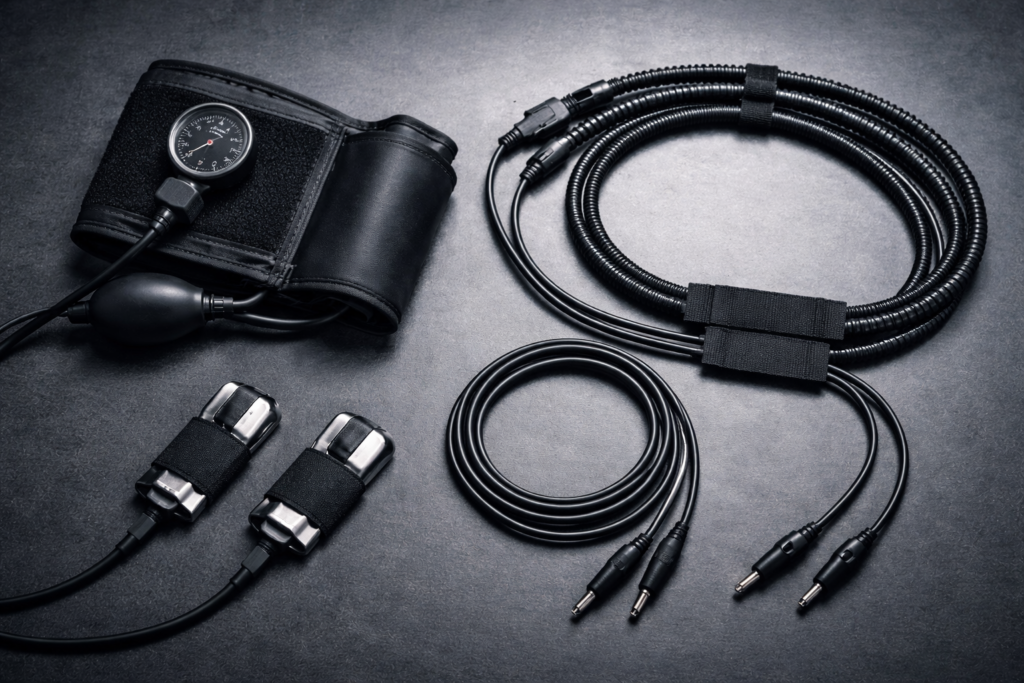
- Pneumographs: Two rubber tubes placed around the chest and abdomen measure the rate and depth of respiration. Deceptive subjects often experience “respiratory suppression” or shallow breathing.
- Galvanometers: Small sensors attached to the fingertips measure Galvanic Skin Response (GSR). When you are stressed, your sweat glands become more active, increasing the skin’s electrical conductivity.
- Cardio-Sphygmograph: A blood pressure cuff measures changes in heart rate and mean blood pressure. A “lie” typically causes a spike in these readings as the body prepares for a perceived threat.
The "Nervousness" Factor: Why It Matters
One of the most frequent debates in Butte County legal circles is which test is more “fair” to an innocent person who is simply nervous about being accused.
- Polygraph Critique: Because the polygraph measures general physiological arousal, critics argue it can struggle to distinguish between the fear of being caught (guilt) and the fear of being wrongly accused (innocent nervousness).
- CVSA Defense: Proponents of CVSA argue that because it isolates a specific vocal frequency governed by the brain rather than general body sweat or heart rate, it is less susceptible to “innocent nervousness.” The vocal micro-tremors are thought to be more specifically linked to the cognitive effort of maintaining a lie.
Technical Side-by-Side Comparison
|
Feature |
Polygraph |
CVSA |
|
Scientific Field |
Biology / Physiology |
Physics / Acoustics |
|
System Tested |
Autonomic Nervous System |
Central Nervous System (Vocal Tract) |
|
Signal Source |
Heart, Skin, Lungs |
8-12 Hz Vocal Micro-tremors |
|
Interpretation |
Manual chart reading by examiner |
Algorithm-generated frequency patterns |
|
Vulnerability |
Physical countermeasures (muscle tensing) |
Lower vocal tremors are involuntary, but no method is immune to all countermeasures. |
The Role of the Examiner
Regardless of the technology, the examiner is the most critical variable. At the Rooney Law Firm, we ensure that every test whether CVSA or polygraph is conducted using validated protocols like the Zone Comparison Test or the Modified General Question Technique. This ensures the “stress” identified is actually linked to the specific issue at hand, and not a random emotional reaction.
Case Studies: Truth Verification in Action
The effectiveness of these tools is best measured by their ability to break “cold” cases or resolve high-stakes disputes where traditional evidence is lacking.
- Cold Case Resolutions: CVSA has been a vital tool for agencies like the Illinois State Police, who used voice stress analysis to obtain a confession in a decades-old murder case where polygraphs had previously been inconclusive.
- Sensitive Investigations: In cases involving sexual assault or child abuse, the “intimidating” nature of polygraph sensors can be re-traumatizing for victims or lead to inconclusive results for suspects due to extreme emotional distress. The non-invasive nature of CVSA allows for a more “humane” interview process, which has led to critical confessions in sensitive Butte County matters.
- Exoneration: Just as these tools find the guilty, they are equally powerful at clearing the innocent. At the Rooney Law Firm, we have seen “passed” results force the District Attorney to drop charges after recognizing that their primary witness’s account was linguistically stressed and unreliable.
The Limitations: When "Magic Buttons" Fail
No technology is infallible. To maintain legal integrity, we must acknowledge the limitations of both methods:
- The Human Element: The accuracy of the test is only as good as the Examiner. An improperly phrased question can trigger a stress response that has nothing to do with a lie.
- Countermeasures: While it is difficult to “fake” vocal micro-tremors, certain physical countermeasures (like tensing muscles or using tacks in shoes) have been historically used to attempt to “beat” a polygraph by creating “noise” in the physiological charts.
- Pathological Factors: Individuals with certain neurological conditions or those under the heavy influence of specific medications may produce “flat” or unreadable charts on either device.
Investigative Breakthroughs vs. Courtroom Proof
At the Rooney Law Firm, we frame these statistics as Investigative Truth. Even if a 98% accuracy rate is debated in a courtroom, a passed CVSA remains a formidable tool for negotiation. It provides the “hook” needed to demand that a prosecutor re-evaluate their evidence or to convince a spouse that a full disclosure has finally been made.
Practical Differences (The Experience & Invasiveness)
Beyond the science, the “user experience” of a lie detector test often dictates which tool is best for a specific situation. In Chico, where many clients seek testing for sensitive relationship issues or workplace disputes, the environment of the test can significantly impact the clarity of the results.
The Testing Environment: Clinical vs. Conversational
One of the most immediate differences between the two methods is how they feel to the person being tested.
- The Polygraph Experience: A polygraph is, by nature, a clinical and often intimidating procedure. The subject must remain perfectly still while strapped into a blood pressure cuff, pneumograph tubes across the chest, and galvanometers on the fingers. For some, this “physical tethering” increases baseline anxiety, which the examiner must carefully filter out to avoid a false positive.
- The CVSA Experience: CVSA is fundamentally different. There are no sensors attached to the body. The subject speaks into a high-quality microphone while sitting in a comfortable chair. This creates a much more conversational atmosphere, which often leads to more natural disclosures and less “test-induced” stress.
Time, Efficiency, and Flexibility
In legal strategy, timing is everything. Whether you are racing against a 100-day evidence preservation deadline or trying to resolve a family crisis, efficiency matters.
- Setup and Calibration: A polygraph requires a significant “balancing” period to calibrate the sensors to the subject’s unique physiology. A standard exam can take 2 to 4 hours. CVSA requires minimal setup, allowing the examiner to focus more on the interview and less on the machinery.
- Questioning Protocols: CVSA allows for more flexible questioning during the exam. If a subject provides a vague answer, the examiner can often pivot and ask follow-up questions in real-time. Polygraph protocols are generally more rigid, requiring pre-set question lists that cannot easily be altered once the sensors are active.
Application Matrix: Which Test Is Best for You?
Not every dispute requires the same tool. At the Rooney Law Firm, we match the method to the specific intent of the client.
Situation | Recommended Tool | Why? |
Criminal Defense (Pre-Filing) | CVSA or Polygraph | Both are powerful. Polygraph is often requested for federal matters; CVSA is excellent for rapid “suppression hook” analysis. |
Relationship/Infidelity | CVSA | The non-invasive nature reduces the “interrogation” feel, making it easier for partners to communicate and find closure. |
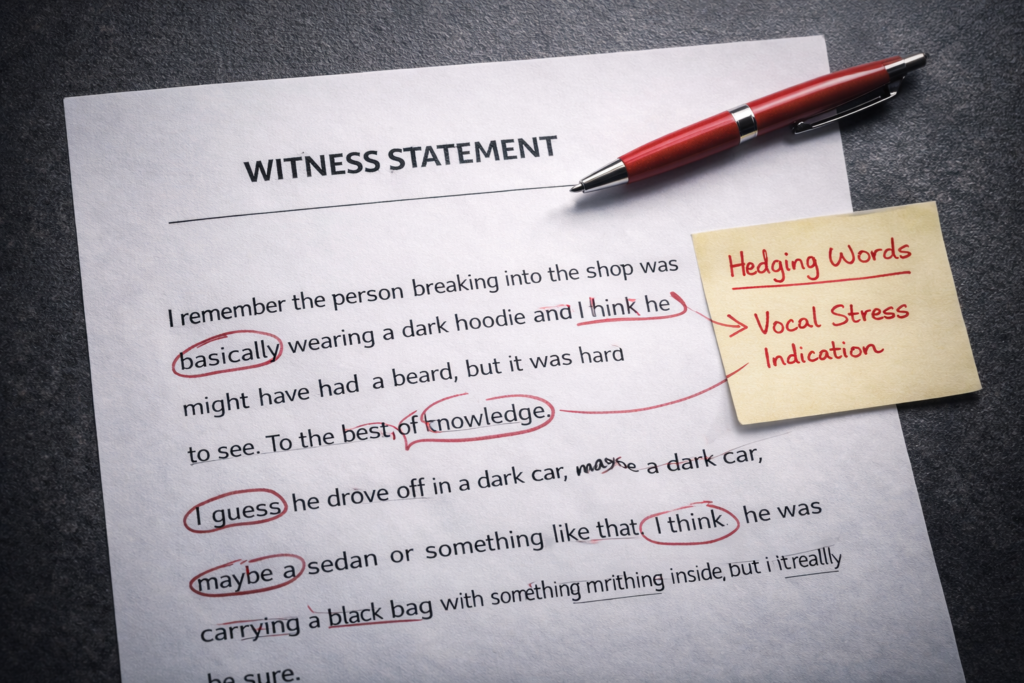
Workplace Allegations | Statement Analysis First | Due to EPPA restrictions, we often start with linguistic analysis to protect the client legally before moving to physical testing. |
Old/Cold Case Strategy | CVSA | As seen in Illinois State cases, voice stress is often better at cutting through years of “rehearsed” stories. |
The "Invasive" Factor in Family Law
In high-conflict custody cases in Butte County, the goal is often to reduce tension, not increase it. We find that parents are far more willing to agree to a “voice stress analysis” than to being “strapped to a machine.” By choosing the less invasive option, we can often obtain a stipulation between opposing attorneys that would have been impossible with a traditional polygraph.
Admissibility in California: The "Magic Button" Myth
It is a common misconception that “passing” a lie detector test automatically clears your name in court. In California, the law is very specific about how this data can be used. lie detector tests in Chico
- California Evidence Code § 351.1: This statute generally prohibits the admission of polygraph results in criminal proceedings. However, there is a major exception: Stipulation. If both the District Attorney and the Defense Attorney agree (stipulate) to the test beforehand, the results can often be introduced as evidence.
- The “Negotiation Hook”: Even when results are not admissible in a trial, they are incredibly powerful in the Pre-Filing and Plea Bargaining stages. At the Rooney Law Firm, we use “passed” CVSA or polygraph reports to show prosecutors that their case has a “credibility gap.” This often leads to dismissed charges or significantly reduced sentences before a jury is ever seated.
- Civil & Family Law: In Butte County family law or civil litigation, truth verification is often used to resolve “he-said, she-said” disputes over assets or conduct. While a judge may not rely solely on a test, the results often force a settlement between parties who were previously at a stalemate.
Frequently Asked Questions
While polygraph accuracy is often cited around 85%, CVSA manufacturers and various law enforcement studies report accuracy rates up to 98%. However, “accuracy” in the field depends heavily on the examiner’s skill and the subject’s cooperation.
It measures inaudible 8-12 Hz frequency shifts in the voice called “vocal micro-tremors.” These tremors are governed by the central nervous system and disappear when a person is under the specific stress of deception.
Not automatically. In California, Evidence Code § 351.1 generally prohibits polygraph results in criminal trials unless both sides stipulate. CVSA results face similar limitations. However, both are powerful negotiation tools before trial.
CVSA is significantly less invasive. It requires only a microphone and a conversation. A polygraph requires being “tethered” to the machine via blood pressure cuffs and chest tubes.
Always speak with an attorney first. Taking a test without a legal strategy can be risky. We ensure your testing is done under Attorney-Client Privilege, meaning the results are protected and only shared if they benefit your case.
Service Area: Chico & The North State
We provide CVSA, Polygraph, and Statement Analysis services throughout:
- Butte County: Chico, Oroville, Paradise.
- Tehama County: Red Bluff, Corning.
- Glenn County: Willows, Orland.
Chico Office: 1458 The Esplanade, Chico, CA 95926
Choosing the Right Path
If you are facing a life-changing allegation, the difference between CVSA and a polygraph could be the difference between a dismissed case and a conviction. At the Rooney Law Firm, we don’t just “give tests” we build strategies.
Book a Confidential Truth Verification Strategy Session contact Rooney Law Firm
Chico Phone:
(530) LAW-HELP (530-345-5678)
Toll Free:
(800) TKO-4LAW (800-856-4529)
24/7 Text Line:
(530) 529-4357
Truth‑verification tools such as CVSA, polygraph, and statement analysis are decision‑support methods, not lie‑detectors in the absolute sense. No technology is 100% accurate, and results should always be interpreted with the help of qualified legal counsel. Results depend on the specific facts of your situation and the conditions of testing.
Table of Contents
You do not have to decide alone. Rooney Law Firm helps clients understand whether CVSA, polygraph, or statement analysis is the right option for their legal, personal, or workplace matter. Get attorney-backed guidance before scheduling a test.
Truck Accidents in Chico, California: What Victims Should Know Truck accidents in Chico can leave families dealing with serious injuries, lost income, and difficult questions about what to do next.
Top 5 Dangerous Intersections in Chico CA for Car Accidents Dangerous intersections in Chico CA can put drivers at serious risk because of traffic volume, turning conflicts, poor visibility, and
On behalf of Rooney Law Firm posted in Car Accidents Car accidents in Chico or Northern California can happen for many reasons. Understanding what causes these crashes can help you